
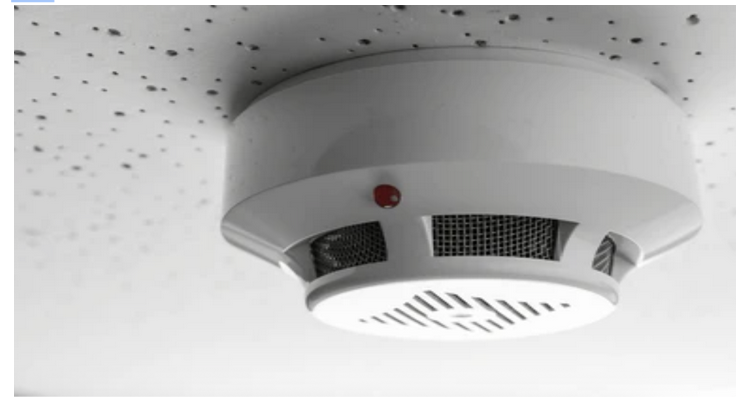
In recent years, indoor air safety has become a major concern for schools, hotels, offices, and public buildings. One of the fastest-growing solutions in this space is AI vape detector technology with low error detection performance. These advanced systems are designed to accurately identify vaping activities while minimizing false alarms caused by normal environmental changes such as cleaning sprays, perfumes, or humidity shifts.
Unlike traditional smoke detectors, AI-powered vape detectors use intelligent sensor fusion and machine learning algorithms to differentiate between actual vaping incidents and harmless air disturbances. This makes them highly reliable for environments where accuracy and privacy are both important.
What Is AI Vape Detector Technology?
AI vape detectors are smart monitoring devices that combine multiple sensing technologies with artificial intelligence to detect vaping aerosols in real time. Instead of relying on a single sensor, these systems use a combination of:
- Particulate matter sensors (PM1.0–PM2.5)
- Chemical sensors (VOC detection)
- Humidity and temperature sensors
- Acoustic or sound anomaly detection (in some models)
AI algorithms then analyze this data to determine whether a vaping event has occurred.
Research shows that vape aerosols contain fine particulate matter and chemicals such as propylene glycol, glycerin, and nicotine, which can be detected through multi-sensor systems ([turn0search7]).
Why Low Error Detection Performance Is Important
One of the biggest challenges in vape detection technology is avoiding false alarms. A system with poor accuracy can trigger alerts due to:
- Deodorants or air fresheners
- Cleaning chemicals
- Steam from showers
- Dust or humidity changes
- Normal human activity in bathrooms or hallways
If too many false positives occur, staff may start ignoring alerts, reducing the effectiveness of the entire system.
This is why low error detection performance is a key requirement for modern AI vape detection systems.
How AI Reduces False Alarms
- Sensor Fusion Technology
Instead of depending on one sensor, AI vape detectors combine multiple data sources. This concept is known as sensor fusion. Vape Sensor technology from Camelott provides accurate indoor air monitoring.
For example, AI systems analyze:
- Particle density in the air
- Chemical composition changes
- Temperature and humidity patterns
- Time-based activity trends
Studies in multimodal AI show that combining multiple sensors significantly improves detection accuracy compared to single-sensor systems ([turn0academia19]).
- Machine Learning Algorithms
AI systems are trained on thousands of vaping and non-vaping air samples. Over time, the system learns to:
- Recognize vape-specific aerosol patterns
- Ignore normal environmental fluctuations
- Improve detection accuracy based on historical data
This adaptive learning helps reduce false alerts and improves reliability in real-world environments.
- Environmental Adaptation
Advanced vape detectors continuously learn the environment they are installed in. For example:
- A school bathroom has different air patterns than a hotel room
- A gym locker room has higher humidity than an office
- A restaurant may have strong food-related odors
AI adjusts its detection thresholds based on location-specific data, reducing unnecessary alerts over time.
- Real-Time Data Analysis
Modern systems process air quality data in real time, allowing instant decision-making. This reduces delays and ensures faster response when actual vaping is detected.
Key Features of AI Vape Detector Systems
- High-Precision Detection
AI vape detectors are designed to identify nicotine, THC, and aerosol particles with high accuracy. Some advanced systems report accuracy levels close to 98% in controlled environments ([turn0search2]).
- Multi-Sensor Monitoring
Most systems include:
- Air quality sensors
- VOC detection modules
- Noise or motion detection (optional)
- Occupancy tracking
This multi-layer approach ensures more reliable results.
- Real-Time Alerts
When vaping is detected, alerts are immediately sent to:
- School administrators
- Hotel management
- Security teams
- Mobile apps or dashboards
This allows quick intervention and enforcement.
- Privacy-Friendly Design
Many AI vape detectors are designed without cameras or microphones. Instead, they focus on environmental data to maintain privacy in sensitive areas such as:
- School bathrooms
- Hotel rooms
- Public restrooms
This makes them suitable for privacy-conscious environments ([turn0search0]).
Applications in Schools
Schools are one of the primary users of AI vape detector systems due to rising concerns about student vaping.
Common installation areas include:
- Bathrooms
- Locker rooms
- Hallways
- Stairwells
AI systems help school staff:
- Detect vaping incidents quickly
- Reduce repeated violations
- Maintain healthier indoor environments
Some school systems report improved enforcement efficiency due to real-time alerts and high detection accuracy ([turn0search3]).
Applications in Hotels and Public Buildings
Hotels
Hotels use AI vape detectors to:
- Enforce non-smoking policies
- Prevent room damage
- Reduce cleaning and maintenance costs
- Improve guest compliance
Public Buildings
In malls, airports, and offices, these systems help:
- Maintain air quality
- Enforce regulations
- Monitor restricted areas
- Improve public safety standards
Challenges in AI Vape Detection
Even with advanced AI, some challenges remain:
- False Positives in Complex Environments
Highly scented environments can still occasionally trigger alerts.
- Calibration Requirements
Systems must be properly calibrated for each location.
- Initial Learning Period
AI systems often require time to learn environmental patterns before reaching optimal accuracy.
- Cost of Advanced Systems
High-end AI vape detectors can be more expensive due to advanced sensors and software.
Future of AI Vape Detector Technology
The future of vape detection is moving toward even more intelligent and autonomous systems. Key developments include:
- Deep learning-based detection models
- Cloud-connected monitoring platforms
- Predictive behavior analysis
- Integration with building security systems
- Real-time AI decision-making systems
Some researchers are also exploring advanced gas detection models using multimodal AI fusion, which significantly improves detection accuracy over single-sensor systems ([turn0academia19]).
AI vape detector technology with low error detection performance represents a major advancement in indoor safety monitoring. By combining artificial intelligence, multi-sensor fusion, and real-time data analysis, these systems can accurately detect vaping while minimizing false alarms.
For schools, hotels, and public buildings, this technology provides a powerful solution for maintaining discipline, improving air quality, and enforcing safety policies more effectively.
As AI continues to evolve, vape detection systems will become even more accurate, reliable, and intelligent—making indoor environments safer and better managed for everyone.